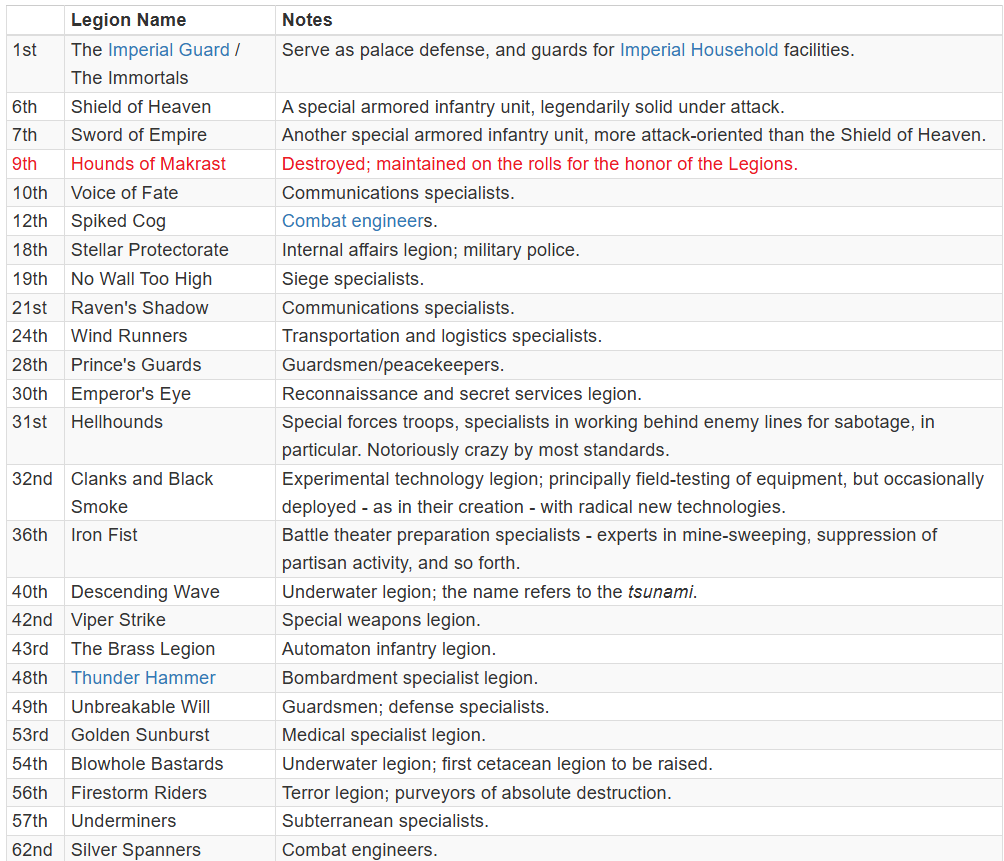
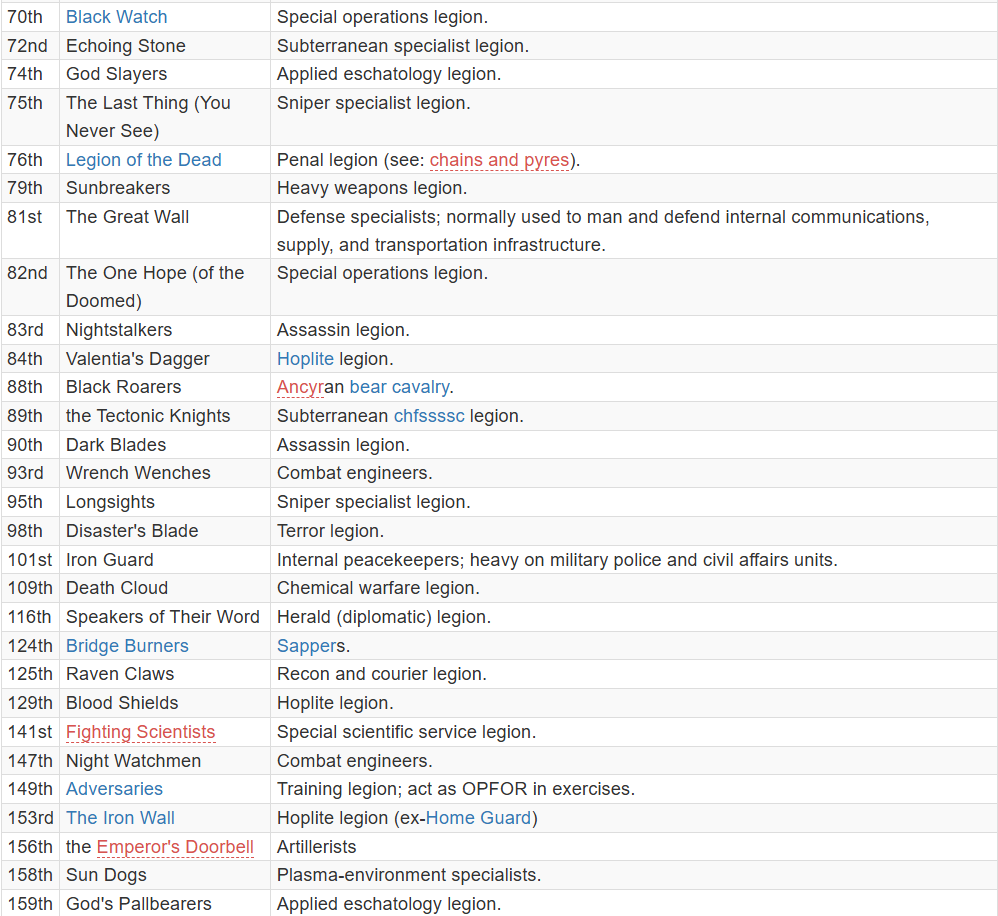
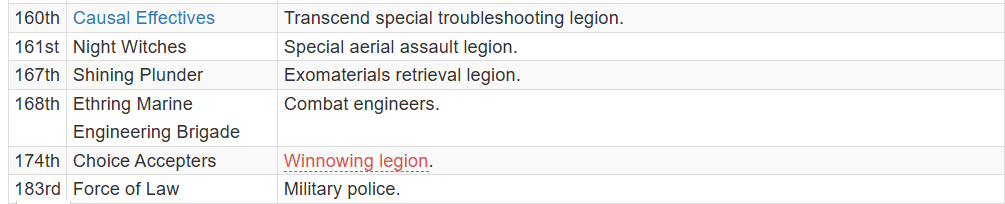
Does the Empire have this kind of “superpower”?
Lifted from an alternate heresy project
Numeration: The XXth Legion.
Primogenitor: Xanthos, known as the Dreamwalker, the Thrice-Sighted.
Cognomen: The Black Stars, (prior irregular) the Occulted Sons, (limited/uncertain) the Chiliagram
Observed Strategic Tendencies: Macro-coordination, precision engagement, trans-theatre campaigns, psychic warfare, counter-strike and tactical reserve, lore-culling.
Noteworthy Domains: The world of Thrais, the XX Legion additionally bears tertiary tithe rites across the Imperium (details restricted).
In creating the Legiones Astartes, each unique in nature, we now know the Emperor’s designs to have been woven with deeper meaning and purpose than any save a few among even His closest advisors and confidants were aware of at the time. Yet, it was an aspect of His being that few ever considered in its own right, overshadowed by the brilliance of his other unparalleled abilities and skills. That He did what He did in such a synchronous manner, that His reasons and intent were so beyond mortal ken, was but an expected outcome of all else that He was capable of.
It is, perhaps, obvious in hindsight that the Legion which so harmonised with this aspect of the Emperor was likewise so little considered on its own merit, and proved so concerning when it was.
Origin: Orphans under the Sky
In the case of many of the Emperor’s Legions, there could be seen some sign or portent of what the future held for them in the first selection of recruits, from the belligerent passion of the XVth to the taciturn independence seen in the IVth. By comparison, the criteria under which the first of the XX Legion were selected was obscure, favouring no bloodline, talent, location or mark of character. Adding further to the mystery, the Emperor Himself took an active hand in the Legion’s creation, standing in direct oversight at every stage, and at the nexus of all decisions made regarding them, from the timing of gene-seed implantation to the initial order of ranking.
However diverse they may have been in origin, the legacy of their gene-sire placed a powerful mark of shared identity upon them as they underwent the transformation into astartes, and one that became more and more apparent as they aged. Hair shifted towards an ever paler blond and eyes to a silver grey, while skin bleached out over years and decades of service to an almost pearlescent pallor. Even to other astartes the form and appearance of those carrying the gene-seed of the XX Legion grew more and more alike over time. An inner change, however, was subtler but more readily noticed in the beginning, a rapport between Legion brothers that bordered on the preternatural and ignored any barrier or lack of familiarity between them.
The first mention of the XXth in the Unification Wars appears in the Legion’s own internal records rather than the grand rolls of honour maintained by the Devisio Militaris. Squad and company scale detachments fighting alongside their older sibling-Legions and in support of mortal hosts, attacks launched and defences held. Again, no common thread served to link the battles or the mission briefs issued, and no outstanding achievement on the battlefield was attributed to them despite their success. Yet, during this time each order to deploy legionnaires to the battlefield came from the very highest level, and it is known that the Emperor received every report from these specific engagements, irrespective of whatever other task was occupying Him.
In terms of honours earned and glory gained over the Unification Wars, the history of the XX Legion was sparse in comparison to their fellows, even those founded after them. It could not be said that they suffered failure or setback in any notable way, indeed in terms of objectives achieved they ranked highly. And yet there was something almost procedural about their engagements, reports submitted by the Emperor’s observers mention no sense of great achievement in what they did compared to other Legions, or that there was any doubt as to the outcome beforehand. They did what was asked and expected of them, but it appeared little more could be said. There was little in the way of heroics or victory claimed against impossible odds. An air of expectation grew among those in positions to observe their progress at large, waiting for a revelation that stubbornly refused to come. It was a common rumour even then that the Emperor created each Legion with some purpose woven into the fabric of their being, but none could guess what it might be for the XXth.
A Pattern in the Grand design
Departing the Solar Dominion in the 12th Expeditionary Fleet, supported by a patchwork of mortal auxiliaries, the Legion’s initial compliances seemed to herald only a continuation of what was seen on Terra. The Legion was equally successful in battle and bringing worlds peacefully into the Imperial fold, no doubt was ever spoken that they would not be, but it amassed little repute in the process nonetheless.
An opinion began to form that it was simply poor luck and ill chance that the XXth forever missed the opportunity to match the glory of its peers. The petty empires it toppled would fall apart as soon as any pressure was applied, the armies it fought lacked the mettle to make their defeat a thing of glory, those who welcomed them with open arms would have done so for any Imperial fleet. While their cousins’ had the chance to build a reputation and establish a name for themselves that would be remembered down the ages, the Last seemed always to find themselves on the path of forgettable ease and be left in the shadow of other’s victories. A Legion ‘Occulted from the sight of those now laden with glory’ as one Lord Commander would note in her journal. More often, and by far, they would be present in the background of conquests achieved by other Imperial forces, their Expeditionary fleet was slowly becoming dispersed, though even here it seemed that the compliances they assisted in armies saw them out of place to gain glory save what was reflected from the leading host. If nothing else could be said, the sons of the XXth worked well alongside whichever armies they were sent to assist, and while many and varied views were held, none were disparaging or held complaint. As with many things looked back on with hindsight, it would be a source of surprise how few appraisals seemed to match, or hold truth beyond the bearer’s expectations or bias.
With numbers still low and recruitment still a seemingly labyrinthine process that defied any attempt at unraveling, it looked as though the XXth was to become as much a footnote in the annals of the Great Crusade as it was possible for an Astartes Legion to be. Still the Emperor maintained His quiet watch over them.
Unseen Constellations
As the Crusade expanded beyond Segmentum Solar however, questions started to arise among some in the War Council as they began to notice details that could not be easily explained. Not even the most outlandish simulations run by the Stratagoi ever predicted a Legion only encountering weak opposition, especially not when it roamed so widely and encountered such a variety of foes. Something more was at play that eluded conventional wisdom or detection. As they sought further, hints towards a pattern began to emerged, coincidental timings in the deployment of reinforcement, or chance positioning of troops that would come to play key, but subtle, rolls in a battle or campaign. Reconstructions of past engagements revealed the Legion to be in the right place at the right time with growing, improbable, regularity. Before more time could be devoted to this mystery, the XXth became caught up in a separate issue that demanded the Council’s attention.
While many Legions counted among their number those displaying some degree of psychic potential, the brothers of the VIII Legion had progressed far beyond the pale in both number of legionnaires so empowered and the extent of the abilities they wielded. Evoking a steadily growing sense of fear and anger in those who remembered how much damage had been inflicted by rogue witches across human worlds, calls were made for a resolution to the issue. The Occulted saw the next greatest number of such brother-psykers, far more indeed than those who first raised voice on the matter had thought, though it was with a focus on far subtler arts, and while without the rigid controls of Lord Aethios’ Legion, there was more structure in place than the VIIIth employed, and perhaps more self-awareness and understanding of why it was needed. The First Primarch would be considered to win the debate which followed, for the time being at any rate, drawing together agents of the Imperial Household, the most talented of the varied Legion psykers, and those from his own homeworld trained in warpcraft, to formulate organisation and training regimes to be spread throughout the Legions. Thus was the Librarius project instituted, with the quiet influence of the XXth at play within it.
Obscured even in this arena by the nova-flare of the VIII Legion’s displays, the Occulted returned to a position in the shadow of its peers, a position likely to have remained unchanged in most eyes for some time were it not for contact being made between the Emperor and the XXth Primarch.
Child of a Broken World
The Emperor would discover nineteen of His stolen progeny, while a twentieth would discover Him.
The Fractured World, the Wounded Lands, Thrais. What terrible works were enacted, that time and space and aether were injured? What unimaginable weapons were deployed, that they left scars upon the fabric of the universe itself? What hope of answer, when cause and effect rippled outward and beyond, rewriting what had been and would be?
It is impossible now to know the truth of Humanity’s first colonisation efforts and the civilisation they built in that lost era. It’s quite possible there is no longer a truth to be found, torn asunder as the Catastrophe broke a small corner of reality and left it to heal unset.
As always however, Mankind survived its trials and adapted to the new way of things. The rain fell on one side of a street before the other, a moment might be slow or fast in one place or another, a mountain might always be distant no matter how long you travel, and a road might only exist in one direction. Anything can become mundane given time. Towns and cities were founded, land was farmed, wars were fought, life was lived. Much was lost of what the people there once had by way of technology and lore, but not all, and some would be discovered anew. The shape of life came to reflect the struggle between stability and unpredictable change that haunted the world it rested on.
The people came to learn that the damage done to their world was not a static thing, but at times spread and contracted in strange sysles, distorting the weave of causality so that the past and future reached across the present, the near and far were no longer. The wise, gifted and inquisitive gathered to pool their skill and learning, acquired and forged instruments that let them look beyond the veil, developed disciplines offered a route to understand the impossible and safeguard their fellows from it. On the rare moments when those wounds in reality ran deep enough to reach the Beyond and bring it Within, they gave warning to prepare from the observatory-monasteries where they plotted the movements of the stars. Humanity fought, died, and once again rebuilt on the remnants as the cycle turned once more and again.
It was to this world that the XXth Primarch fell from the warp through a crack in existence, his incubation pod blazing with a aura of tortured warding. It was from this world he looked out and saw a light in the distance.
Spoiler: The Great Work
Xanthos, whose tall form was painted with the designs of eternity and haloed with hair of white gold. Whose embracing gaze reflected many colours, and transcendent mind perceived the ten thousand angels of reality. Having met and communed deeply upon the Sea of Souls, it was a mere formality when the Bucephalus came into orbit of Thrais, father and son embracing as festivals celebrated the the world’s reunion with its kindred across the stars.
The Emperor would spend far longer on the homeworld of His newest son that any other, examining the Great Work used to undo the damage inflicted on Thrais and the universe around it. Xanthos would recall the pleasure of meeting another who matched and exceeded his knowledge and ability, the debate they engaged in challenging him in a way he had not encountered before, while their discussions allowed him to speak with another who perceived the universe to the degree he did for the first time. On Terra, the newly returned Primarch was, in the same manner, to remain far longer than any of his siblings, inspired by what he encountered. Long days of study were spent in the Hall of Leng alongside his Father as they compared the anomalies there to the cracks in reality that had afflicted Thrais. Within the City of Silence he spent much time ensconced in the astropathic chambers as he meditated, considering the architecture and geometries involved that transcended the material plane and shaped the ether in mirrored forms. Of the Immaterium the two superhuman beings would speak at length and under the most secret and secure conditions, the Emperor both tutoring His son in yet higher Arts and warning him further of its dangers.
Across the wider Imperial Court, Xanthos was known for being deliberate in thought but decisive in action, for the absolute attention paid to those he encountered, and the captivation of his presence on those he directed his attention to. The Sigillite and he were oft seen in conversation, the conservator General and Master of the Adeptus Telepathica hosted him regularly as he plumbed their archives.
Spoiler: The Nature of Truth
Calibration
When the time came to depart Terra and take up the mantle of General, Xanthos was met by the whole of his Legion upon the surface of Terra in the shadow of the Imperial Palace. Thirty thousand sons forged in his image, now his to command. No words were spoken between them in this moment of perfect communion, but it was said he shed two tears as they knelt.
From the journals and letters of those courtiers who encountered him in these last few days on Terra, the Primarch was apparently pleased with the reports on his Legion and their performance, leading some to worry that he may not grasp the art of war as hoped, or misunderstood what was being said, however unlikely that could be. A single record, long lost to chance error in the record vaults of the Palace, offers another view, and some explanation behind the change in cognomen that took place then. In xanthos own voice, we hear part of an exchange between him and the, then, Chapter Masters of his Legion: ‘‘You are as dark stars in the heavens my sons, constellations unseen against the midnight sky, weighting the motion of fate in Mankind’s favour.’’
Changes to the Legion came as quickly as they were smoothly completed, a new cycle of induction swiftly began which would bring the first Thraisian legionnaires into the Emperor’s service. In short order, the newly renamed Dark Stars Legion took to the void once more, and for the first and only time as a single force deployed towards a single purpose. Its target was the palace-world domain of the Argent Princes, long resistant to compliance and having already succeeded in repulsing the 26th and 14th Expeditionary Fleet with terrible losses. Xanthos declined further support, stating that his sons and their auxiliaries would be sufficient despite the War Council’s expectations and prior plans.
Some believed that the Primarch sought to make right the underwhelming performance and record of his Legion to date, that he felt the need to prove what they were capable of or that they were due no less respect than the sons of his Brother-Primarchs. Others suggest Xanthos was making a point, clarifying the error in judgement he believed had been made when others looked upon his son’s successes in the past, or aimed to show the Emperor that his faith was not misplaced. More inclined to keep his own counsel than proclaim his intent and opinion, it is likely now that none will ever know.
Breaking into realspace at speed and continued without pause, the fleet cast forth its drop pods and stormbirds from afar as it arced round the planet, avoiding the orbital defence ring by the barest margin. Below, the Princes’ silver-plated grenadiers reacted quickly to the Legionnaires landing, troops redeploying to surround the invaders and reinforce the formations sent first to engage them, heavy weapons were brought forward and mechavelry columns readied. Chemhanced, utterly devoted, and the product of gene-lines bred across generations of their rulers’ feud-wars and exhibition battles, the forces set against the Dark Stars had already driven off three invasion attempts, interrogated to destruction the prisoners taken, and already disseminated the knowledge gained on the Imperium’s methods of warfare across its officer corps. Before Xanthos’ made his intent known, the War Council had planned for the V Legion to bring the planet into compliance. Now the XXth would seek to do so with a quarter of their numbers.
What followed was nothing less than a rout, a revelation of the truth behind the XX Legion’s reputation, and, faintly, the inspiration of fear in those who witnessed it. All in one act. The armies of the Argent Princes were outmaneuvered, their ambushes bypassed, regiments gathered for the next push were ill-positioned when the time came. They charged into kill-zones, misread the Legion’s deployments or intended targets, found themselves bottlenecked or overspread. Not because they were inexperienced, undisciplined, lacking in skilled commanders or support, but because the Dark Stars read their intent, foresaw their actions, and perceived the underlying patterns guiding them. And with this knowledge they acted, honing the edge of their understanding until by the time came when the Princes knelt before them, the enemy were unwittingly moving where the Legion directed them with subtle signal and false showing. At the centre strode Xanthos, clad in pearl warplate and painted silk, the axis of a vast mandala of war incorporating all it touched into his design. The gift he possessed to understand the motion of space and the shape of time expressed in its most terrific form.
Here and now, the battles and wars fought by the Legion could be seen in the light of new understanding. Enemies that fell not for their own weakness but by a hand that understood them better than they did themselves, even while the XXth were themselves still coming to understand the talent they carried written into the very fabric of their being. Victories that were won not by the favour of chance and good fortune, but by seeking the shape of success and assuming it in the face of opposition.
Spoiler: Articles of Power
The movements of the Heavens
After the fall of the Argent Princes, the Legion slowly spread out across the Great Crusade, detachments often joining other Expeditionary Fleets for a time before moving on at their Primarch’s command, or at some unknown sign. By themselves, the Dark Stars moved across the galaxy in a swirling tide that ebbed and flowed around their beloved Primarch as he set the course of their advance. Inscrutable though they may have been in their movements, the Dark Stars came to be welcome additions to the battleline of many a Lord Commander, the advice of its officers welcomed, though rarely offered unless asked for, and the lack of friction seen in their deployment alongside myriad other Imperial forces appreciated. Where before they were known as the Legion that suffered the cruel kindness of fate, now they were courted for as heralds of victory by the armies they fought alongside, talismans of Mankind’s destiny.
Perhaps from the perspective of one who had already achieved great things before entering the Emperor’s service, and was by nature inclined to see both the bigger picture and the part played by each individual in it, Xanthos was less concerned with honours and glory than most of his brothers. The saying ‘success rewards with itself’ is attributed to him, and it cannot be denied that he stood second in far more victories than his peers, or so readily split his Legion so that it was named as ally to more who were crowned with glory for the victories than they were granted themselves. The XX Primarch is thought in fact to have been the least active on the battlefield from among that superhuman brotherhood, given more to the wider orchestration of his sons’ campaigns, spread as they were across systems and sectors of the void, and the bringing of worlds into the Emperor’s domain through diplomacy. Yet, when he did stand upon the field of battle it was as the herald of doom and the unstoppable motion of fate set against them.
Not all were enraptured by the Legion or its Master however. There were a number who felt his methods lacked proper honour, or were wary in light of his psychic nature. For a small minority there was maybe an understanding that what they saw in him was as much their own expectations reflected back as the true nature of the man, and who worried that some vast game was being played by him that they did not understand. The Emperor, if any doubt was brought to him, held no reservation, and at times still dispatched missions to them that He would see done in ways that other Legions could not.
Of all the Emperor’s sons, and the Legions who were their sons in turn, Xanthos and the XXth showed no concern as the Great Crusade came towards what many thought to be its final stages. While some others did indeed look forward with positive light to the place they and their Legions would occupy in the era to come, there was still at least the natural apprehension of the unknown, or worry as to how others might cope. All the while, the Lord of the Dark Stars continued onwards unperturbed as though no ending approached at all.
Unit Formation and Structure within the Legion
From the very start, the Primarch’s hand was active in the reordering of his newfound sons. Light but far reaching, often unseen, and always with purpose towards his vision. The absolute dictat practiced by some of his brothers was a crude tool in his eyes, to one who could hold the entire system of his Legion’s workings in his mind’s eye and plot the ripples of each change as he made them, there was no need. Looking in, the Dark Stars seemed to fragment and reform, revealing the hidden design that suddenly emerged fully formed. It says much of the swiftly established trust between the Legion and its Primarch that this occurred as smoothly as it did, and of Xanthos’ talent for intuiting patterns and building on them.
In place of the Chapters and Companies of more traditional Legions, Xanthos restructured his sons into twelve Great Houses, themselves of twelve Lesser Houses broken down into Fellowships and finally squads. To fulfill their purpose in the Primarch’s grand design, all were organised and equipped to operate independently in whatever conditions or situation they found themselves in, each an echo of the formation above it and echoed by that below. Whatever thoughts might have been had on how it occurred, as the compliances achieved by the Legion mounted none could deny the effectiveness of the changes implemented.
The extensive arsenals set at the disposal of each House, focused somewhat on the more precise arms available to the Legions, combined with the intensive training of each individual legionnaire to allow each son of the XXth to serve in a variety of roles to suit the needs of each mission. With the limited numbers available to them, in general and specific campaigns, this new direction in method set out by the Primarch saw the massed formations of dedicated troop types found in other Legions fall to the wayside. At the heart of the matter lay a simple concept, but one the Primarch held true and central, that by deliberate, individual actions at the right moment was fate moved no less than by those of nations committed without care. From this principle would come the standard unit of infantry deployed by the Dark Stars, the Hundred-Handed as Bhatu, Primarch of the XVth, named them, though they carried no special designation in their own Legion. Each unit was equipped with bolter, bolt pistol and gladius, anti-armour and -infantry grenades, and paired special issue weapons, so as to be able to engage in whatever manner of combat was required.
Though standing specialist units were uncommon, some, mostly unique to the XXth, were maintained. The most outwardly famed, and internally respected, of these were the Lotosi, fellowships of battle-psykers deployed to the most crucial of battles and where the outcome of wider events hung in the balance, charged with but a singular purpose they were empowered to achieve at all cost. It was in Xanthos’ hands alone to select those who would be initiated into this exclusive order, so named for the narcotic Thraisian flower they consumed that was said to clarify their minds of distraction and focus the psychic gift of foresight.
Legion Hierarchy
From the first moment of assuming command, Xanthos formed the axis around which all authority in the Legion revolved, orbited by the Masters of the Great Houses and they by those of the Lesser, and then their Lieutenants and sergeants in turn. Each movement altering the path of others in the shifting pattern of command distribution that emerged. Always a tight knit brotherhood, given to great unity of purpose and action both, it could have been imagined that the presence of one so impactful in their greatness as a Primarch might arrive with disruptive force amid the bonds established. Instead it was as though a missing piece had been seamlessly fitted into a gap that no one had noticed was there, his presence catalysing a synergy that put the Legion’s previous coordination to shame.
While in many Legions there was a sense of one body in action, the leadership of the Dark Stars was more akin to one purpose sought by many paths. Known internally as the Great Spiral, the pattern of command repeated itself as it trailed further from the Primarch. The Masters of each Great House served as Xanthos’ councilors and advisors. Each of them in turn was attended to by the Masters of the Lesser Houses under them, they by the Lieutenants of the Fellowships, and finally the Lieutenants stood counseled by their sergeants. Compared to a number of its peers, this command structure was shallow, though to those within it one that possessed considerable degrees of nuance. Success and ability saw deference and preference, with a high value on the experience of older legionnaires even of lower rank. It is interesting to note, that of all the Primarchs, Xanthos had no favorites or close companions from among his sons, and that to outsiders there was almost a sense of distance in his manner for all his sons possessed devotion that might have implied each alone was the sole bearer of their Father’s grace.
With each step the responsibility extended to them narrowed from the limits of the Primarch’s prescience towards the singular moment at hand, from Crusade level strategic orchestration down to the tactical considerations of a squad on the battlefield. At the same time, considerable allowance for initiative being extended to officers of all ranks, more by far than permitted by any other Legion. By extending set levels of authority at which each legionnaire could act at their own recognizance, the Dark Stars gained the ability to act with speed and decisiveness, confident in their fellows ability to respond appropriately. Indeed, the ability to successfully navigate the opportunities and hazards of chance as it was woven into the tapestry of the moment was a mark of distinction, and forerunner to promotion in many cases if tempered by appropriate care. Bolstered by the almost supernatural sense of understanding among the Legion’s sons, and the psychic gifts shared by so many of their number, few other Legions could boost such coordination and adaptability.
One facet of the Legion Command that stood out, and attracted criticism from some, were the changes to the Librarius Xanthos implemented. Always a Legion broad and deep in its psychic potential, the Librarius had been an important and extensive feature since it was first established, even if bearing the status of Librarian was seen more as a detail of ability rather than a rank in its own right, with many holding it alongside other ranks. Under the Primarch’s gaze the distinction disappeared entirely even as its training was refined under his care and the number of legionnaires with it grew. It was a rare officer who lacked demonstrable ability in the Arts, though many of them displayed such insight that it seemed they must possess it in a secret form.